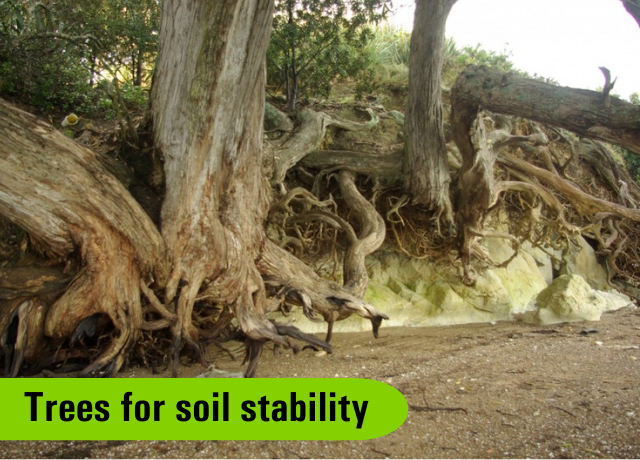
Why keeping trees matters for soil stability and water control
In many parts of New Zealand, trees play a critical role well beyond shade and appearance. With our mix of steep sections, clay soils, coastal banks, and increasingly intense rainfall events, trees are one of the most effective natural tools we have for reducing erosion, preventing slips, and managing excess water.
Tree Roots Stabilise Soil and Slopes
Tree root systems act like underground reinforcement, binding soil together and increasing its resistance to movement. This is particularly important on sloping land, banks, and rural properties where soil can shift during heavy or prolonged rain.
On lifestyle blocks and farms, established trees help stabilise paddocks, fence lines, and access tracks. In residential areas, trees on banks, cut-and-fill sections, or near retaining walls can significantly reduce the risk of soil slumping or gradual ground movement.
Unlike grass, which has shallow roots, trees anchor deeper soil layers, providing long-term stability. Native species such as Pōhutukawa, Kānuka, Mānuka and Pūriri are especially effective and well-suited to local conditions.
Canopies Reduce the Impact of Heavy Rain
When rain hits bare ground directly, it can dislodge soil particles and create surface erosion very quickly. Tree canopies intercept rainfall, breaking it up and slowing it down before it reaches the soil.
This is particularly important during intense downpours, which are becoming more common across New Zealand. By reducing the force of rainfall, trees help prevent soil being washed downhill or into drains, waterways, and neighbouring properties.
In urban areas, trees also help reduce stormwater runoff, easing pressure on drainage systems and limiting pooling around foundations and driveways.
Trees Help Control Water in the Ground
Trees actively manage water through transpiration, drawing moisture from the soil and releasing it into the atmosphere. This helps prevent soil from becoming overly saturated, which is one of the main causes of slips and slope failure.
Root systems also improve soil structure, creating natural channels that allow water to soak in gradually rather than running off the surface. This slows water movement, reduces erosion, and helps maintain healthier soil over time.
Removing Trees Can Increase Risk
Removing trees on cliffs and banks without proper assessment can significantly increase erosion and instability. Without roots holding soil together and canopies reducing rainfall impact, land becomes far more vulnerable during wet weather.
In many cases, full removal isn’t necessary. Professional pruning, retrenchment, or staged management can improve safety while retaining the tree’s protective benefits.
A Balanced, Long-Term Approach
At The Treeman, we regularly assess trees on both rural and residential properties where land stability is a concern. Our goal is to balance safety, tree health, and environmental protection.
Healthy, well-managed trees are one of the most effective and natural defences against erosion, slips, and water damage. If you’re unsure about the condition or safety of trees on your property, a professional assessment can help you make informed decisions that protect both your land and your investment.