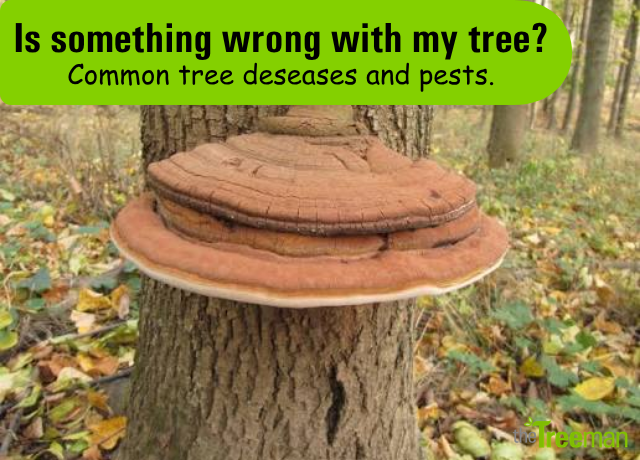
Whats wrong with my tree?
Is something wrong with my tree?
Signs every gardener should look out for.
Tree Diseases, Pests and Tree Health
Trees are one of the greatest assets in any garden. They provide shade, shelter, privacy, wildlife habitat, and a connection to nature that can last for generations. But like all living things, trees can experience problems.
A tree that suddenly starts losing leaves, developing strange growths, leaking sap, producing fungus, or showing signs of dieback can leave homeowners wondering:
Is my tree sick? Is it dangerous? Can it be saved?
The good news is that not every unusual feature means your tree is in trouble. Some things such as lichen growing on bark, are completely natural and harmless. Other signs, such as fungal fruiting bodies, root damage, or extensive dieback, may indicate a serious underlying problem.
A tree’s health is often evident in their appearance or changes in their appearance. Learning to recognise these warning signs can help you identify problems early and take action before minor issues become major ones.
At The Treeman, we regularly assess trees across Franklin, Auckland and the Waikato, helping homeowners understand what is happening with their trees and what options are available.
This guide explains some of the most common tree diseases, pests, damage and health issues found in gardens, and when it may be time to call a qualified arborist.
How do you know if your tree is healthy?
A healthy tree is more than just one with green leaves. Trees are complex living organisms that respond to their environment, weather conditions, soil health, pests and diseases.
Signs of a healthy tree include:
✔ Strong, even growth
✔ Good leaf colour and density
✔ Normal seasonal leaf changes
✔ Strong branch attachments
✔ No significant dead branches
✔ Healthy bark with no major wounds
✔ Stable roots and no ground movement around the base
A healthy tree also has the ability to defend itself. Trees do not heal wounds in the same way humans do, but they can compartmentalise damage by isolating injured areas and preventing problems from spreading.
This is why good tree care matters. Correct pruning, maintaining healthy soil, removing deadwood, proactive thinning or reductions, and protecting the roots all help improve resilience.
Common signs something may be wrong with your tree
Many tree problems first appear as small changes. Early detection can make the difference between managing an issue and losing the tree.
Things to look out for include:
Yellowing leaves, premature leaf drop, or sparse foliage. This may indicate nutrient deficiencies, root problems, drought stress, fungal disease, insect damage, or poor growing conditions
Dieback in the canopy. Dead branches appearing throughout the crown may be caused by disease, root damage, pests, environmental stress, natural ageing.
Fungus growing on the trunk or branches. Visible fungal fruiting bodies are often a sign that decay is occurring inside the tree. Mushrooms sprouting from the roots or the trunk are fruiting bodies of fungus.
Not all fungi are harmful, but fungi growing from living wood should always be investigated, particularly on large mature trees near buildings, roads or areas where people gather.
Sap or liquid leaking from the bark. Trees sometimes “bleed” sap after injury, but persistent leaking may indicate bacterial infection, fungal infection, physical damage, or internal stress.
Bark damage. Damage to the bark can interrupt the movement of water and nutrients and leave trees vulnerable to infection. Bark damage includes ring barking, mower or weed-eater wounds, rubbing damage, and poor pruning cuts.
Common tree diseases and disorders
Sooty mould.
Does your citrus tree look like it’ s covered in ash or soot?
Most homes would have access to a lemon tree, even if it’s the neighbours. However, there is one common issue that can make their leaves and stems appear covered in a black ash.This is called sooty mould.
Sooty mould itself is not the primary problem. It develops because of sap-sucking insects such as aphids, scale insects, mealybugs, and whitefly. These insects feed on the tree’s sap and produce a sticky sugary substance called honeydew. This honeydew coats the leaves and provides the perfect surface for black fungal growth.
The result is a dark, powdery coating that can impacts photosynthesis and reduces plant vigour, impacts fruit production, and makes the tree look unpleasant.
Auckland’s warm, humid climate provides ideal conditions for both insect pests and fungal growth.
Managing sooty mould on citrus trees
The key is not treating the mould first — it is managing the insects causing it.
Regular inspections are one of the easiest ways to catch problems early.
When collecting fruit, take a moment to look closely at the underside of leaves, new shoots, and stems and branches
Look for:
- sticky honeydew
- clusters of small insects
- distorted leaves
- black coating on leaves
Natural predators such as lady birds, lacewings and predatory insects can help keep pest numbers under control. The easiest way to control these pests is by using horticultural oils, such as neem oils that works by smothering sap-sucking insects. Washing the leaves will remove some of the mould, but unless the insects are controlled, it will quickly return.
Pruning heavily affected branches and maintaining good airflow through the tree can also reduce problems.
Healthy citrus trees respond better to pests and disease compared to a an already compromised tree, so maintain good watering practices, use quality compost or mulch, and apply a balanced fertiliser.
Citrus trees can produce impressive crops for their size, so a little care goes a long way.
Curly leaf on peaches and nectarines
Curly leaf is one of the most recognisable fungal diseases affecting stone fruit trees, particularly peaches and nectarines. The scientific name is Taphrina deformans and it causes distorted leaves, reddish or yellow colouring, swollen or twisted growth, premature leaf drop, or reduced fruit production.
The fungus survives over winter on bark and buds. When temperatures rise and spring growth begins, spores infect the new leaves.
Once infected, the leaves cannot be cured so the aim should be prevention.
Preventing curly leaf
Good airflow around the tree reduces fungal problems, so avoid overcrowding trees and prune appropriately.
Spraying before bud burst is the important timing window.
Common treatments include:
- copper-based sprays
- horticultural oils
- lime sulphur
These help reduce overwintering spores and pests before new growth appears. Copper sprays are effective and are available in many formulations, including options suitable for organic gardens.
Other fungal diseases that can affect fruit trees include, brown spot, scab, black spot, and botrytis
A healthy tree is always your first defence against disease. Good nutrition, correct pruning, removal of dead wood and maintaining healthy soil will give your trees the best chance of resisting problems.
Dutch Elm Disease – can Elm Trees be saved?
Dutch Elm Disease (DED) is one of the most devastating tree diseases in the world and has had a significant impact on elm populations throughout Europe, North America, and parts of New Zealand.
It’s a fungal disease that affects elm trees and is particularly concerning because it can progress rapidly. In some cases, infected trees can decline and die within only a few weeks.
The first signs of Dutch Elm Disease are often subtle and may include curling leaves, yellowing foliage, wilting leaves, dead branches appearing in the upper canopy and sections of the crown dying back.
As the disease progresses, larger sections of the tree decline until the entire tree may eventually die.
How does Dutch Elm Disease spread?
Dutch Elm Disease is primarily spread by elm bark beetles.
These beetles carry fungal spores and introduce them into healthy trees as they feed beneath the bark. The disease can also spread through root connections between nearby elm trees and through the movement of infected firewood or timber.
Once inside the tree, the fungus blocks the movement of water through the vascular system. The tree responds by attempting to defend itself, but unfortunately this defence response often contributes to the blockage that causes wilting and decline.
How is Dutch Elm Disease identified?
Professional diagnosis usually involves inspecting the tree and examining affected branches. When a branch is cut, an infected tree may show a characteristic brown staining or ring of brown dots within the wood. Samples can also be sent to laboratories for confirmation.
Early identification is essential because removing infected material quickly helps prevent the disease spreading to neighbouring trees.
Can Dutch Elm Disease be prevented?
The good news is that preventative treatments are available. A vaccine has been developed that stimulates the tree’s own immune response. It does not contain Dutch Elm Disease itself. The treatment is injected into the trunk annually and has shown promising results, particularly in protected and valued elm populations.
For important specimen trees, vaccination may provide an opportunity to preserve these magnificent trees for future generations. The vaccine is not available for private home owners.
If you have an elm tree showing signs of decline, early advice from an experienced arborist is important. The sooner the problem is identified, the more options are available.
Phytophthora root rot – the hidden tree killer
Some of the most serious tree problems begin below ground. Phytophthora root rot is one of the most common causes of root and stem decay in trees and shrubs. It is particularly damaging because by the time symptoms appear above ground, the problem is often already well established.
Despite traditionally being described as a fungus, Phytophthora is actually a fungus-like organism that behaves similarly to fungal pathogens.
It thrives in poorly drained soils, waterlogged areas, heavy clay soils, and areas with poor root oxygen availability
Symptoms of Phytophthora
Signs may include:
- wilting leaves despite adequate moisture
- thinning foliage
- branch dieback
- poor growth
- yellowing leaves
- decline over several seasons
When the base of the tree is affected, you may notice dark staining, weeping areas, decay near the root collar or an inverted “V-shaped” area of damage at the trunk base.
Excavating around the roots may reveal poor root development or decayed structural roots
How Does Phytophthora Spread?
Phytophthora spores can survive in soil for years. They move through water, meaning they can spread:
- downhill through saturated soils
- through irrigation systems
- on contaminated tools
- on machinery and footwear
A single infected tree may potentially put nearby plants at risk.
Preventing Phytophthora
Prevention is far better than cure.
When planting trees:
✔ Choose suitable sites
✔ Improve drainage where necessary
✔ Avoid planting too deeply
✔ Keep the root collar exposed
✔ Protect roots from damage
✔ Avoid compacting soil around trees
Roots are the lifeline of the tree. Damaged roots create entry points for pathogens and reduce the tree’s ability to defend itself.
Some chemical treatments and biological controls may help manage Phytophthora, but severely compromised trees may eventually need removal.
If replanting after a Phytophthora infection, choose species with better resistance and avoid simply replacing the same vulnerable plant.
Does your tree have a virus?
Finding out that a much-loved tree has a virus can be frustrating, particularly when it is a mature specimen or part of a carefully designed garden. The good news is that many tree viruses do not immediately kill the tree.
However, they can:
- reduce vigour
- distort growth
- affect appearance
- weaken the tree over time
Tree viruses are different from fungal diseases because there is generally no cure once a tree becomes infected.
Think of it similarly to a human virus — some individuals show obvious symptoms, while others can carry the virus without visible signs
How do tree viruses spread?
Viruses can be transmitted through:
- aphids
- mealybugs
- other sap-sucking insects
- infected pruning tools
- plant material
Some trees can carry a virus in a dormant state and only show symptoms when stressed by drought, insect attack, poor soil conditions and environmental changes.
Signs of a possible tree virus.
Symptoms vary depending on the tree species but may include:
- unusual leaf patterns
- distorted growth
- reduced vigour
- uneven canopy development
- abnormal flowers or fruit
A tree with a virus may become a source of infection for other closely related trees in the garden. For example, if one tree in a group of newly planted magnolias shows signs of a virus, there may be a risk to neighbouring trees.
When deciding whether to retain or remove a potentially infected tree, it is important to consider:
- the value of the tree
- the health of surrounding plants
- the severity of symptoms
- the likelihood of spreading
An arborist can help assess the risks and advise on the best approach.
Slime Flux – is when a tree starts weeping
Have you noticed a wet, sticky, or unpleasant-smelling patch on your tree trunk? This may be bacterial wetwood, commonly called slime flux. Although it can look alarming, it is actually a tree defence response to bacterial activity inside the wood
What causes Slime Flux?
Bacteria enter through wounds and begin breaking down wood tissues.
As the bacteria multiply:
- gases build up inside the tree
- pressure increases
- moisture is forced out through cracks or weak areas in the bark
The liquid that emerges is fermented sap containing sugars, bacteria, or a yeast yeast-like organism
This is why slime flux often has a strong, unpleasant smell.
You may even notice insects gathering around the area because they are attracted to the sugary liquid.
Can Slime Flux be treated?
Unfortunately, there is no direct cure. However, many healthy trees can eventually compartmentalise the affected area and continue growing.
The best approach is reducing stress:
✔ Maintain good soil health
✔ Mulch around the root zone
✔ Avoid unnecessary wounds
✔ Use correct pruning techniques
✔ Remove dead branches
Some species are more susceptible than others. Silk trees (Albizia julibrissin) are particularly known for struggling with slime flux.
A tree affected by slime flux needs monitoring because weakened areas may become vulnerable to other pathogens and decay organisms.
Fungi on your trees – when is it a warning sign?
Fungi play an essential role in nature. They break down dead organic matter, recycle nutrients, and help maintain healthy ecosystems.
In a forest environment, fungi are a vital part of the natural cycle. However, when fungi appear on a living tree, especially on the trunk or major branches, they can sometimes indicate something more concerning.
The important question is: Is the fungus simply living alongside the tree, or is it breaking down the tree’s structure?
Why do fungi grow on trees?
Most fungi enter trees through:
- pruning wounds
- storm damage
- broken branches
- root injuries
- natural cracks or weak points
Trees cannot “heal” wounds like animals. Instead, they respond by compartmentalising the damaged area and attempting to prevent decay from spreading.
If fungi successfully establish themselves inside the tree, they begin breaking down wood tissues.
Different fungi attack different parts of the tree:
- some break down cellulose
- some break down lignin
- some cause softening and decay of structural wood
Over time, this can reduce the strength and stability of the tree
Jelly Ear Fungus.
One fungus that often attracts attention is Jelly Ear Fungus (Auricularia auricula-judae).
It is named because its soft, gelatinous fruiting bodies resemble a small ear growing from the wood. While it is a fascinating organism and plays an important role in nature by decomposing dead wood, finding it on a living tree can be a concern.
What does Jelly Ear Fungus mean for a tree?
Jelly Ear Fungus commonly grows on:
- dead branches
- decaying wood
- weakened trees
For arborists, seeing fruiting bodies on a mature specimen tree often suggests that decay has been developing internally for some time. By the time a fungus produces a visible fruiting body, the decay process may already be well established.
The fungus attacks the heartwood of the tree
What is heartwood decay?
The heartwood is the central, older wood inside the trunk. Although heartwood is not living tissue, it provides much of the structural strength of the tree.
When decay affects heartwood:
- branches may become weaker
- trunks may lose strength
- the risk of failure can increase
A tree can sometimes tolerate internal decay for many years, but the level of risk depends on:
- the amount of decay
- the location of the decay
- the species of tree
- the size of the tree
- what is underneath it
A mature tree with fungal decay beside a house, driveway, playground or public area should always be assessed by a qualified arborist.
Can a tree with fungi be saved?
Sometimes. Management options may include:
- removing affected branches
- reducing the weight of high-risk limbs
- improving growing conditions
- monitoring the tree over time
However, if decay has significantly compromised structural stability, removal may eventually become the safest option. Good pruning practices are one of the best ways to prevent fungal problems. Incorrect pruning cuts, especially large flush cuts or unnecessary wounds, create entry points for decay organisms
Why do trees bleed sap?
Many homeowners become concerned when they see liquid leaking from a tree. It can look like the tree is injured or dying. However, trees naturally respond to injury by producing sap, resin or other protective substances.
This is often called bleeding.
Why does a tree produce sap?
When a tree is damaged, it activates a defence response which includes pushing out sap. The tree attempts to seal the damaged area, prevent infection, isolate the injury and protect living tissue.
Sap can contain compounds that help slow the growth of bacteria and fungi around the wound and this is an important part of the tree’s natural defence system
What causes trees to bleed?
Common causes include pruning cuts, broken branches, storm damage, insect attacks, bark injuries, and root damage
Some species are naturally more prone to bleeding, especially if pruned at certain times of the year.
When is bleeding tree cause for concern?
Occasional bleeding after damage is usually not a problem. However, persistent or excessive bleeding may indicate:
- bacterial infection
- fungal infection
- internal decay
- stress
- root problems
The key is identifying the cause.
A bleeding tree is not necessarily a dying tree, but it is a sign that something has happened and should be investigated if it continues.
Lichen on your trees – should you be worried?
One of the most common concerns we hear from homeowners is “Is this lichen killing my tree?”. The answer is usually No.
Lichen is not a disease and does not feed on the tree. It simply uses the tree as a place to grow.
What is lichen?
Lichen is a fascinating partnership between two organisms, a fungus and an algae or photosynthetic partner.
The fungus provides structure and protection, while the algae produce energy through photosynthesis. Together, they create a living organism capable of surviving in some of the harshest environments on Earth.
Why does lichen grow on trees?
Lichen often grows on older branches, slow-growing areas and trees with an open canopy. It is more common where sunlight reaches the bark.
Lichen does not steal nutrients from your tree.
It does not:
- invade the bark
- damage the wood
- weaken branches
Is lichen a sign of poor tree health?
Not necessarily. Lichen can actually indicate a healthy environment. Some lichens are very sensitive to pollution and are used as indicators of air quality.
New Zealand has an incredible diversity of lichens, with many species found nowhere else in the world. They also provide habitat for tiny insects, mites, and native invertebrates.
When lichen dies and falls, it contributes nutrients back into the ecosystem. Rather than removing it, enjoy the texture and colour it brings to your garden.
Tree pests – the hidden threat
Many tree problems begin with insects.
Some insects are harmless, while others can cause significant damage by:
- removing sap
- damaging leaves
- boring into branches
- introducing disease
Healthy trees are much better equipped to resist pests, but stressed trees can quickly become vulnerable.
Citrus Borer – a hidden threat to citrus trees.
Citrus trees are popular throughout Auckland and New Zealand gardens, but they can be vulnerable to borer damage. Borer insects are particularly destructive because the damage happens inside the tree where it is difficult to see.
How Does Citrus Borer Damage Trees?
Adult beetles lay eggs in cracks, wounds or freshly cut branches. When the larvae hatch, they tunnel into the wood. Over time, these tunnels interrupt the movement of water, nutrients, and sugars through the branches.
The larvae can remain inside the tree for several years before emerging as adult beetles. This means significant damage can occur before the problem is noticed.
Protecting citrus trees from borer
Good pruning timing is important. The best time to prune citrus in Auckland is generally after the main fruiting period, from late winter into early spring. Avoid creating fresh wounds during the beetle flying season where possible.
When harvesting fruit use secateurs rather than pulling fruit off.
Remove any damaged branches.
Maintain airflow through the canopy
If borer holes are discovered:
- remove badly affected limbs where possible
- cut back to healthy wood
- treat holes where appropriate
- monitor surrounding trees
In some cases, removing one heavily infested tree may offer some protection for the rest of the garden or orchard.