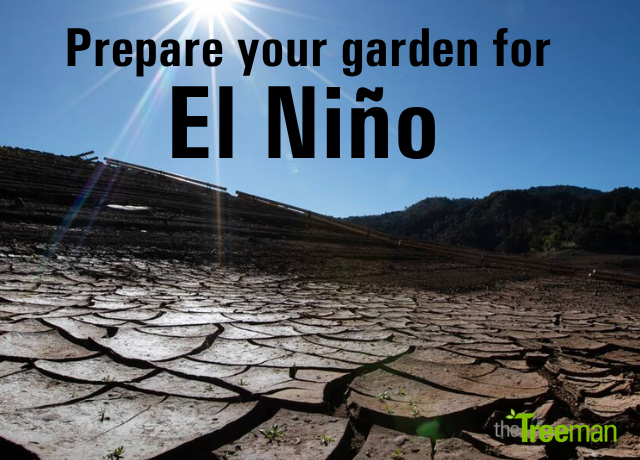
El Nino and your trees
Early indications suggest we are in for a powerful El Niño weather pattern this summer, but what does that actually mean?
The impacts are likely to be one of the hottest and driest summers in recent years. We can already see this in the drier winter. Anyone with a water tank will know the tanks are unusually low for this time of year. Temperature spikes are likely.
It also means stronger winds, potentially severe, including cyclones causing damage to trees, etc., and thunderstorms and possible flooding.
How can you prepare your trees?
Healthy trees start below the ground, and improving the soil health and moisture levels will make a huge difference to your tree’s resilience to any stress. Ensure your trees have adequate nutrition; add organic matter e.g., sheep pellets or compost, and mulch to protect the soil.
Shallow or damaged roots offer minimal support in extreme weather. Avoid compacting the soil around trees, and if you need to water them, water deep and less frequently instead of shallow and often.
Trees with overextended branches act as a lever in strong winds, so consider reducing these.
Consider thinning out your trees to allow some wind to pass through to reduce the loading effect from the wind, which can cause breaks and splits.
Leaning trees need special care to manage an unbalanced load. Reduce the weight on the leaning side.
Dead or dying branches should be removed to avoid tears and splits creating more damage.
Look for weak unions that crack under pressure. Where a branch comes off the trunk with a V-shape, it poses a weak point where the joint is under pressure. Strong winds or heavy rain can cause splitting. Remove these weak unions proactively.
Mature trees with a large canopy and heavy limbs may struggle in extreme weather. Reducing the canopy or improving airflow can reduce wind resistance. Consider bracing or cabling for valuable or precious trees to add valuable support.