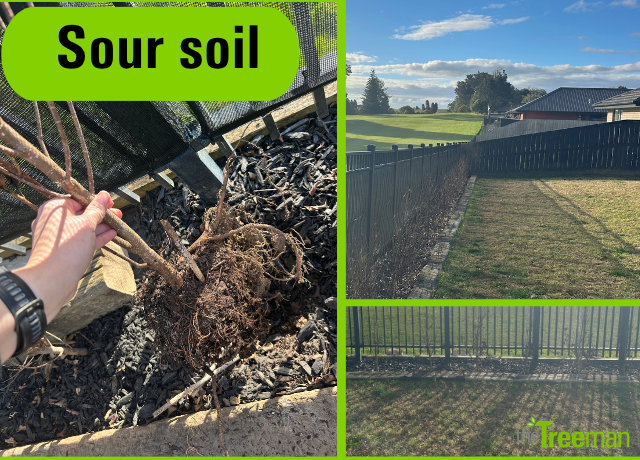
Waterlogged and sour soil
I was recently asked to look at a hedge for a young couple who had spent money they really didn’t have on new hedge plants, only for them all to die. Unfortunately, this happened twice!
On closer inspection, there were several things working against the plants. Although they had been planted at the correct height, black dyed mulch had been pushed right up against their trunks. The site was also against a retaining wall, and the soil was extremely waterlogged and had a sour smell. To make matters worse, the plants were also showing signs of frost damage.
Essentially, there were several factors contributing to the plants’ demise, but the most critical was the excessively wet soil.
When soil remains waterlogged for long periods, the spaces that would normally contain air fill with water. This creates low-oxygen conditions around the roots. Roots need oxygen to survive, and prolonged periods in saturated soil can damage or eventually kill them.
Soil can also develop a sour or unpleasant smell when it stays waterlogged for too long. As oxygen levels fall, anaerobic microorganisms become more active and the normal breakdown of organic matter changes. This can produce compounds with a distinctly sour, stagnant or sometimes rotten-egg smell. These conditions can damage roots, reduce nutrient uptake and eventually lead to root death. Simply adding fertiliser or replacing the plants won’t solve the underlying problem.
The first step is to improve drainage. Water may need to be redirected away from the planting zone, perhaps with the help of Iplex Novacoil drainage, to reduce constant saturation. Soak holes may also be an option, depending on the site and soil conditions.
The soil itself may also need improving. Adding organic matter can help improve soil structure, while products such as gypsum can help improve the structure of some heavy clay soils and allow water to move through more freely.
If the soil is particularly heavy or the area naturally remains wet, another option is to create a raised garden bed, keeping the plants’ roots above the wettest soil and the water table.
Where soil conditions are suitable, dolomite lime may help correct soil acidity while adding calcium and magnesium. However, it is worth checking the soil pH before adding lime, as a sour smell doesn’t necessarily mean the soil is too acidic.
If you have an area of the garden that is prone to holding water, choosing the right plants is also important. Some plants will tolerate saturated soils for prolonged periods, while others simply won’t. In many cases, solving the problem requires a combination of better drainage, improved soil and appropriate plant selection.
The most important lesson is that when plants repeatedly die in the same spot, don’t simply replace them again. Take a closer look at the conditions first. Sometimes the real problem is happening below ground