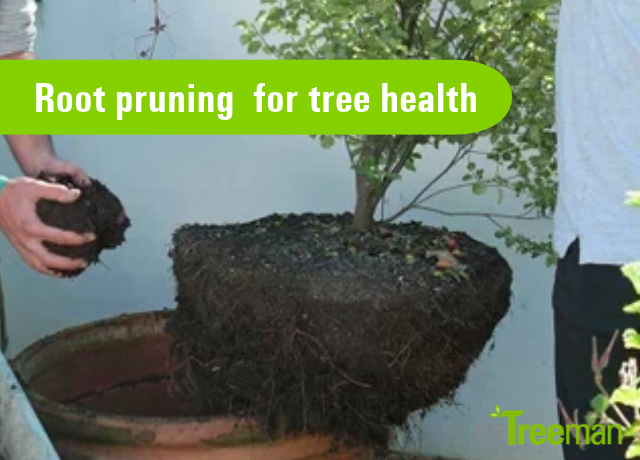
Root pruning for tree health
Root pruning for trees in pots
Has your favourite potted tree stopped thriving, even though you water and feed it? Perhaps water runs straight through, roots are escaping through the drainage holes, or the tree dries out unusually quickly. It may be root-bound, with a crowded root system leaving little space for fresh potting mix.
Moving into a larger container is one option, but sometimes the pot is already the right size for your patio—or too heavy to replace.
For suitable, healthy trees, careful root pruning can create room for fresh potting mix while allowing you to keep the same container and helping your tree to thrive once again.
Check the tree before cutting
Slide the tree carefully from its pot, supporting the root ball rather than hauling on the trunk. A dense mat of roots circling the outside suggests the tree is root-bound. However, poor growth can also result from waterlogged soil, pests, or unsuitable conditions, so root pruning should not be the automatic response to a struggling tree.
Remember too that some species like the Vereya love to be root-bound!
Timing
Timing matters: ideally, late winter or early spring, before vigorous growth begins, but if that’s not possible, avoid working during a hot and dry day. An early morning on an overcast day would be preferable.
A light trim creates breathing room
Using clean, sharp tools, carefully trim a modest amount of congested root growth from the outside and underside of the root ball. Retain the central root system and avoid unnecessarily cutting large roots.
The Royal Horticultural Society suggests removing up to a quarter of the outermost roots when returning a pot-bound plant to the same container. Treat that as an upper limit for suitable plants, rather than a target for every tree. The species, health, and condition of the roots should determine how much is appropriate.
Re pot and provide gentle aftercare
Clean the container thoroughly and check the drainage holes are clear. Add fresh, good-quality potting mix suited to the tree, position it at its previous planting depth, and gently work new mix around the sides. Keep the trunk base uncovered. Take care not to cover the root flare, which is the bit on the bottom of the trunk that flares out at soil level.
Water thoroughly, allow excess water to drain, and shelter the tree from strong wind and harsh afternoon sun while it recovers. Check moisture regularly: the aim is an evenly moist mix, without prolonged saturation.
Follow with fertiliser according to the instructions, taking care not to over-fertilize your tree.